
Unveiling the Lattice GAL16V8D-10LJN: A Deep Dive into the Classic 10ns GAL Device
In the annals of semiconductor history, before the dominance of FPGAs and CPLDs, a family of devices reigned supreme for logic integration: Generic Array Logic (GAL). Among these, the Lattice GAL16V8D-10LJN stands out as a quintessential and enduring representative, a workhorse that cemented the concept of reconfigurable logic for a generation of digital designers.
The GAL16V8 architecture itself was revolutionary. It served as a universal, erasable replacement for a vast array of simple fixed-function logic chips like the 7400-series TTL and numerous PAL devices. Its core innovation was an AND-OR plane structure coupled with programmable output logic macrocells (OLMCs). This allowed a single chip to be configured to perform countless combinational or registered logic functions, dramatically reducing board space, power consumption, and part count.
The "16V8" nomenclature is descriptive: it has up to 16 inputs, 8 outputs, and the outputs are configurable (Variable). The "D" in GAL16V8D signifies a specific package type—in this case, the 20-pin Plastic Leaded Chip Carrier (PLCC). The "-10" is a critical performance parameter, denoting a maximum propagation delay (tPD) of 10 nanoseconds. In an era where processor speeds were measured in MHz, this 10ns speed was more than adequate for implementing address decoders, state machines, bus interfaces, and other glue logic, making it incredibly popular.
The "-10LJN" suffix provides further detail. It often indicates a commercial temperature range (0°C to 75°C), a specific package marking, and the PLCC form factor, which was favored for its compact size and socketability.
The programmability of the GAL16V8D was its crown jewel. Engineers would write logic equations in a Hardware Description Language (HDL) like Abel or Cupl. A compiler would then translate these equations into a JEDEC file, which was "fused" onto the chip using a universal programmer. A key advantage over its predecessor, the PAL, was that it used Erasable CMOS (EECMOS) technology. This meant the device could be reprogrammed and erased thousands of times, enabling rapid prototyping, design iterations, and field updates—a significant cost and time saver.
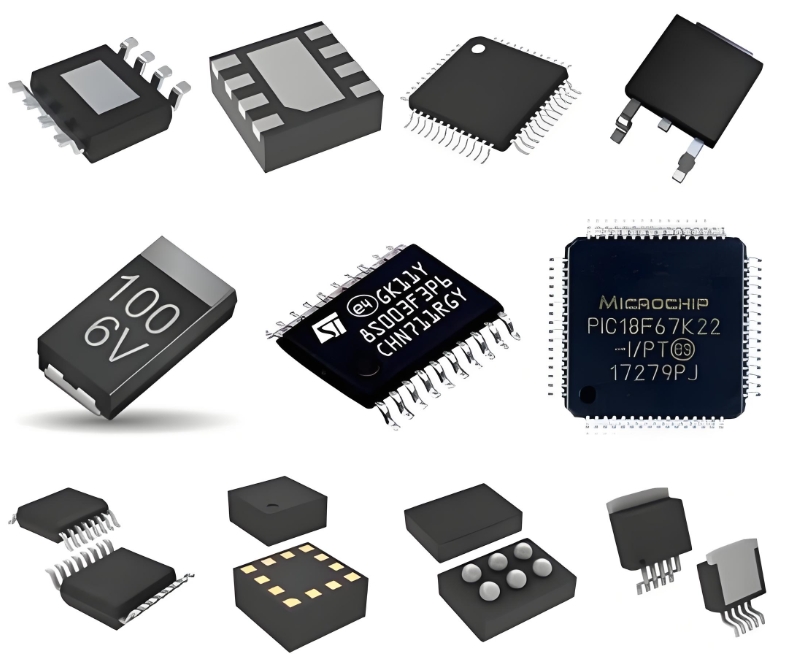
While modern FPGAs offer orders of magnitude more logic density and performance, the GAL16V8D-10LJN retains a vital role. It remains invaluable for legacy system maintenance and repair, where original designs cannot be easily altered. Furthermore, it is perfect for simple "green glue" logic functions in new designs, offloading trivial tasks from a more expensive main FPGA or microcontroller, thus optimizing overall system cost and complexity. Its simplicity means there is no need for complex configuration chips or boot sequences; it simply works upon power-up.
ICGOODFIND: The Lattice GAL16V8D-10LJN is far more than a relic; it is a foundational pillar of programmable logic. Its blend of sufficient speed (10ns), reprogrammability, and pin-compatibility with a host of fixed logic devices solidified its legendary status. It represents a critical evolutionary step in digital design, bridging the gap between hardwired logic and the high-density programmable world we know today. For specific applications, it remains a perfectly valid, cost-effective, and reliable solution.
Keywords:
Programmable Logic Device (PLD)
Generic Array Logic (GAL)
10ns Propagation Delay
Output Logic Macrocell (OLMC)
EECMOS Technology

